

Why Deep Freezes Are the Right Time to Check In With Clients
This isn’t about smart homes. It’s about awareness.
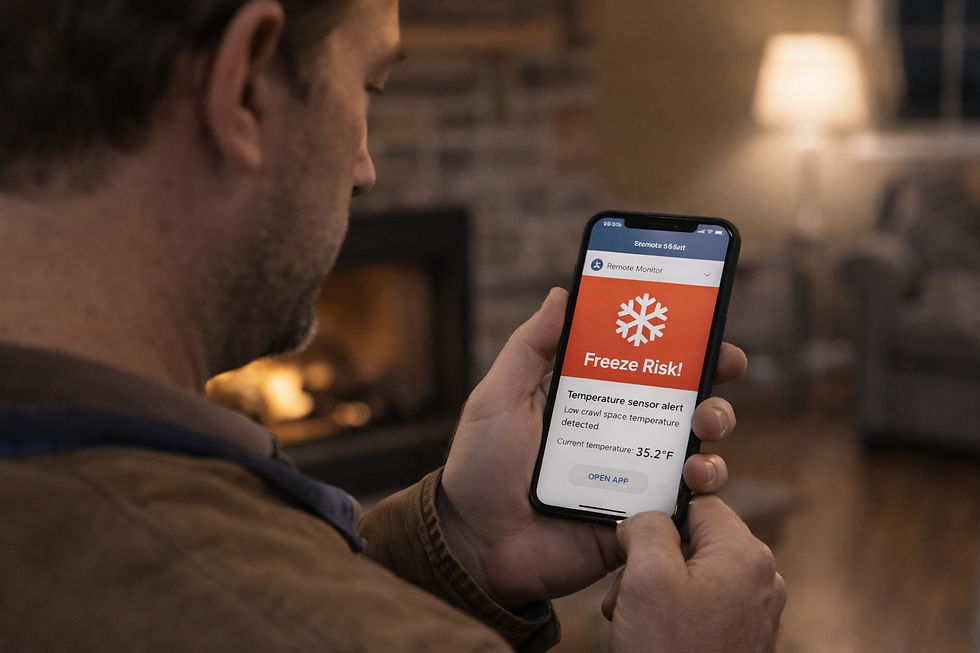
This week I saw a homeowner post about monitoring crawl space temperature during a deep freeze. It was not a sales pitch. It was basic concern about the house and whether everything was okay.
That post matters because it highlights a simple reality: homeowners worry about what they cannot see, and deep cold makes those blind spots expensive. Crawl spaces, basements, garages, and exterior-wall runs can drop into risk temperatures even when the living room feels normal. A thermostat reflects comfort, not exposure.
This is where dealers have a rare advantage that has nothing to do with upselling. You understand the home as a system. You also have a legitimate reason to reach out without it feeling promotional. A deep freeze gives you permission to check in, and checking in builds trust before anything breaks.
If you only show up when something fails, you stay in the “service vendor” box. If you show up when nothing is wrong, you move into the “trusted partner” box. That shift is where future projects become easier, not because you pushed, but because you stayed present. And if you do reach out your ahead because I havent seen an industry publication or even a social media post about these types of solutions?
Is It Because There’s No Revenue in It?
That’s the uncomfortable question.
This isn’t a theater room.
It isn’t a full automation retrofit.
It isn’t a five-figure proposal.
So maybe it gets dismissed and if that’s the reason, we’re missing the point.
The value here isn’t the device.
It’s the moment.

Why this works
Deep freezes create three conditions that make a check-in land well.
Homeowners are already thinking about risk
They are not thinking about features. They are thinking about pipes, heat, and waking up to a problem. If you match the moment, you sound relevant instead of sales-driven.
The problem is invisible
Frozen pipes and burst lines are rarely about effort. They are about blind spots. Monitoring closes the blind spot, but the first step is simply helping the client think clearly about where exposure lives.
This touches multiple trades, so nobody “owns” it
Plumbing, HVAC, electrical, and smart home all overlap here. When no one claims it, the homeowner is left guessing. Dealers can earn goodwill by giving the homeowner a simple plan and offering help if needed.
The “aha” for dealers is straightforward: small, well-timed relevance is how you stay in the client’s world between big projects. This is how the long game is won.

How to reach out without it feeling like marketing
Do not treat this like a campaign. Treat it like a professional check-in.
The tone
Keep it short, calm, and specific. Avoid urgency language, discounts, or feature lists. Your goal is reassurance and clarity, not conversion.
The message structure
Use this sequence:
Acknowledge the weather.
Name the blind spot.
Offer a simple option to confirm everything is okay.
Offer monitoring only as “visibility,” not an upgrade.
Copy-and-paste check-in scripts
Text message (most effective)
“We’re seeing extended cold this week and I wanted to check in. Pipe issues usually start in crawl spaces, basements, garages, and exterior-wall runs that thermostats don’t measure. If you want, we can help you confirm those areas are staying safe, or set simple temperature alerts so you’re not guessing overnight.”
Email (if you need a broader send)
Subject: Quick cold-weather check-in
Body:
“Hi [Name], with the deep cold this week, we’re checking in on clients because frozen pipe problems usually begin in areas the thermostat does not measure, like crawl spaces, basements, garages, and exterior-wall runs. If you’d like, we can help you confirm those areas are staying safe or set up simple temperature alerts so you get an early warning before damage happens. No rush and no pressure, just a practical option if you want peace of mind.”
Phone call opener (for top clients)
“I’m calling because of the deep freeze. I’m not calling about an upgrade. I’m calling because pipes usually freeze where nobody looks, and I wanted to make sure you’re covered.”
What not to do
Do not lead with products. Do not mention brands in the first message. Do not make it sound like a promo. If they engage, then you explain options.

What to offer when a client asks, “What do you recommend?”
You are offering visibility in under-house areas. Keep it in three lanes so it stays simple.
Lane 1: Basic monitoring, no automation
One or more temperature sensors in the crawl space, basement edge, garage, or near exposed pipe runs
Alerts set above freezing so they have time to act
A quick handoff on what to do when an alert hits
Lane 2: Monitoring that ties into an existing smart home platform
This is for clients who already have Control4, Crestron, Savant, or similar and want alerts inside the system they already use.
Environmental temperature sensing (and humidity if appropriate)
Notifications (app, email, on-screen, or push)
Optional logic if the system supports it (alerts first, actions second)
Lane 3: Response layer (when you need the home to do something)
This is where Lutron often fits cleanly. Lutron is not a temperature-sensor platform, but it can be a reliable response layer when paired with monitoring.
Trigger a load, fan, or heat-related circuit based on an alert from the monitoring side
Keep it focused on prevention and stability, not a “smart home pitch”
The key is to describe the outcome, not the parts. The outcome is early warning and calmer decisions during the coldest nights.

What to do this week
Use this checklist so it becomes repeatable.
Make a short list of past clients and current service clients
Start with the clients most likely to have exposure: older homes, crawl spaces, vacation properties, homes with additions, garages with plumbing, and homes with known cold spots.
Send the check-in message
Text for top clients, email for broader reach.
Be ready with a simple “if you want help” path
Offer a quick phone consult, a quick on-site verification, or a simple monitoring install, depending on your model.
Document what you learn
If multiple clients report the same issue (drafts, crawl doors, rim joist leaks, cold garage corners), that becomes future content and future preventative work, delivered in a homeowner-first way.
Why this matters longer than this week’s weather
Clients remember who checked on them when there was nothing to sell. That memory reduces friction later. It increases trust. It also increases the odds they call you first when they are ready to improve something else, because you earned the right to be in the conversation.
Deep freezes are not glamorous jobs. They are credibility moments. Dealers who treat them that way build relationships that outlast the season.
About the Author
Rob Skuba is a U.S. Army veteran and a 25-year veteran of the smart home and AV industry. He’s worked across every layer of the ecosystem, installation, distribution, manufacturing, design, sales, and consumer education, giving him a 360° understanding of homeowner behavior and dealer growth.
Rob has collaborated with top brands, supported legendary home theater designers like Theo Kalomirakis, and contributed to high-visibility projects from luxury homes to major entertainment spaces for 50 Cent. He’s the founder of National Smart Home, Lantern Room Marketing, Date Night In Stereo, and national awareness events including Smart Home Day and National Headphone Day.
Rob Skuba
516-967-0039
The goal is simple: help the right homeowners recognize the right integrator and manufactuere before the first conversation ever happens.


Comments